Loading...
Serving Johnson City, TN and surrounding areas. (423) 672-1719
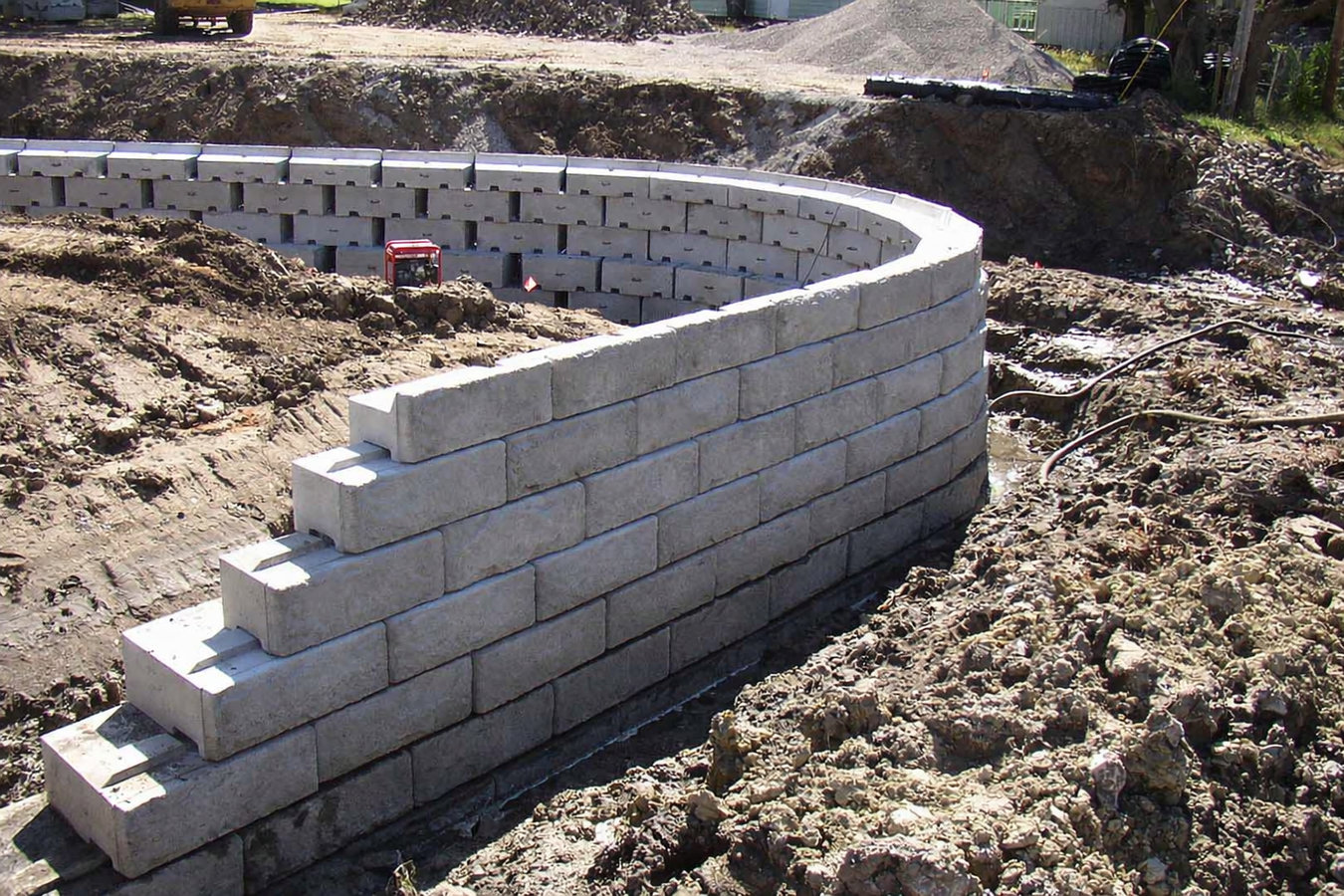
Sloped lots across Johnson City lose soil every rainy season. A properly built concrete retaining wall stops that erosion for good, protects your foundation, and turns an unusable hillside into functional yard space.
Concrete retaining walls in Johnson City hold back soil on sloped or uneven properties, preventing erosion, protecting foundations, and creating flat usable space on hillside lots. Most residential projects take two to five days of active construction, with the concrete reaching full strength within about 28 days.
Johnson City sits in the ridge-and-valley terrain of the Appalachian Highlands, where sloped lots are the rule rather than the exception. Many homeowners here are not building retaining walls to add curb appeal - they are building them because the slope is actively eroding or threatening a nearby structure. If you have noticed soil washing toward your foundation or collecting near your driveway after every spring rain, that problem does not fix itself.
For homeowners with flat areas adjacent to the wall, we can also discuss concrete floor installation for patios or utility areas that tie into the finished wall project.
If you notice bare patches forming on a hillside or soil collecting at the base of a slope near your driveway or foundation after a storm, erosion is actively happening. Johnson City gets around 44 inches of rain per year, and spring months can be particularly heavy. A retaining wall stops this cycle by holding the soil permanently in place.
If an older wall - whether concrete block, timber, or stone - is visibly tilting forward or has cracks running horizontally across it, the wall is under stress it can no longer handle. Horizontal cracks are a sign that the pressure behind the wall is winning. This is not a cosmetic issue. A leaning wall can fail suddenly, especially after a heavy rain.
On sloped lots common throughout Johnson City neighborhoods, soil can gradually migrate toward the house over years. If the ground level near your foundation has crept upward, or if you can see soil pressing against siding or a crawl space vent, the slope is moving in the wrong direction. A retaining wall redirects that movement away from your home.
Many Johnson City homeowners have yards that are large on paper but practically unusable because of steep grades. If a significant portion of your yard is too steep to mow safely or too unstable to plant, a retaining wall with terracing can convert that hillside into flat, functional outdoor space. This is one of the most common reasons homeowners in East Tennessee invest in this work.
We build both poured concrete and concrete block retaining walls, depending on what the site calls for. Every project starts with excavation to below the frost line so the footing stays stable through Johnson City winters - a step that separates walls that last from walls that start shifting after a few seasons. Drainage is not an optional add-on here. Gravel backfill and perforated drainage pipe go in behind every wall we build, because water pressure is the most common reason retaining walls fail in this region. We also handle the permit process, from figuring out whether your wall height requires one to submitting the application and coordinating any required inspections. For yards that include concrete floor installation - a patio slab, walkway, or utility area near the wall - we can combine both under one estimate.
We also work with homeowners who want terraced walls with planting areas between levels, a popular choice in Johnson City neighborhoods where the slope is significant but the homeowner wants to reclaim some of the yard. If your project also involves nearby concrete footings for a fence, outbuilding, or deck post, we can often coordinate that work in the same visit so you are not bringing a crew out twice.
Best for structural walls holding back significant soil loads on steep slopes, offering maximum strength and a clean finished face.
Suited for residential lots where flexibility in height and appearance matters, with the same drainage and footing standards as poured walls.
Ideal for steep hillside lots where a single tall wall is impractical, breaking the slope into usable flat tiers separated by planting areas.
For lower decorative walls that define planting beds or yard edges, where the load is light but a permanent concrete solution beats timber or stone.
Johnson City sits in the ridge-and-valley geography of the Appalachian Highlands, where sloped and terraced lots are simply the norm. Add in the clay-heavy soils common throughout Washington County - soils that swell when wet and shrink when dry - and you have conditions that put ongoing pressure on any retaining wall. A contractor who designs drainage around generic soil assumptions rather than actual local clay behavior is setting up a wall that looks fine on day one but starts to bow or crack within a few seasons. Footings here also need to go below the roughly 12-inch frost depth that applies to the Johnson City area, so the footing stays put when the ground freezes and thaws each winter.
We serve homeowners across the region, including Elizabethton and Kingsport, where the same Appalachian terrain and clay soil conditions apply. Whether your property is on a steep hillside near downtown Johnson City or on the outer edges of the Tri-Cities region, the drainage design and footing depth requirements are the same - and we build to those standards on every job.
We schedule a free on-site visit - usually within one business day of your call - to walk the slope, assess drainage patterns, and measure the wall. Retaining walls are too site-specific to quote over the phone. You will receive a written estimate that covers materials, labor, permit fees if applicable, and timeline before any work begins.
If your wall height requires a permit, we handle the application with Washington County or the City of Johnson City - you do not have to sort out which jurisdiction applies. Before any digging starts, we call Tennessee 811 to have underground utilities marked, which is required by state law and protects your property.
Excavation is the most disruptive day - expect equipment and temporary mess. The footing is poured below the frost line and allowed to cure before the wall goes up. Behind the wall, gravel and drainage pipe are installed to manage water pressure. Weep holes in the wall face let any remaining water escape.
Once the wall is complete, the area is backfilled and compacted. We clean up the work zone and walk you through curing expectations - typically about a week before significant weight or planting near the wall. If a permit inspection is required, we coordinate that before closing out the project.
Free on-site estimate. Written quote before any work starts. We handle the permit process so you do not have to.
(423) 672-1719Johnson City sits at roughly 1,600 feet in the Appalachian Highlands - we build every wall with frost-depth footings and clay-soil drainage designed for this specific region. A wall built to flatland specifications will not hold up through East Tennessee winters and wet springs.
We navigate Washington County and City of Johnson City permit requirements on your behalf - including submitting applications and coordinating inspections. A permitted, inspected wall is documented work that protects you at resale and confirms the build met code.
Tennessee requires concrete contractors to hold a valid state license, verifiable through the Tennessee Department of Commerce and Insurance. Working with a licensed contractor gives you real recourse if anything goes wrong and keeps your homeowner insurance protected.
We cover 12 cities and communities across the Tri-Cities region and surrounding areas. Whether your property is near downtown Johnson City or farther out in Washington County, you get the same crew, the same drainage standards, and the same written estimate process.
Retaining walls built in this region need to account for what you cannot see - the soil composition, the drainage conditions, and the freeze-thaw cycle that comes every winter. We build to those local conditions because we work in them every day.
Once your retaining wall is in place, we can pour a concrete floor for any patio, utility area, or outdoor slab that ties into the finished grade.
Learn moreNeed footings for a fence post, deck, or outbuilding near your new wall? We can coordinate both pours under one project to keep your schedule simple.
Learn moreSpring rain season is the busiest time for retaining wall work in Johnson City. Contact us now to get on the schedule before it fills up.